Showing posts with label Couponing. Show all posts

Friday, September 2, 2011

Determining Stock Up Prices

To go along with my last post about price recognition I thought I would post a little "guide" to help you get a better feel for what you can expect to pay for certain staples.  Most of these prices are with coupons factored in, but some of them (like meat, cheese, and milk) are what you can expect to see as sale prices at the store, since coupons for these items are rare.  If you have any questions or if there are other items you buy often that you wold like to know a good stock up price for, please let me know.

Health, Household, and Beauty
  • Toothbrush:  FREE
  • Toothpaste:  FREE
  • Floss:  FREE
  • Deodorant:  FREE - $0.50
  • Shampoo/Conditioner:  $0.50-$1
  • Body Wash:  FREE - $1
  • Soap:  FREE - $0.25 per bar
  • Pantiliners:  FREE - $0.50
  • Tampons:  $1.50 or so per box
  • Shaving Cream:  $0.50
  • Disposable Razors:  FREE - $1
  • Mouthwash:  $1
  • Detergent:  $0.05 per load
  • Toilet Paper:  $0.01 per sq. ft.
  • Aluminum Foil:  $0.75
  • Paper Towels:  FREE - $0.50 per roll
Food
  • Pasta:  FREE
  • Pasta Sauce:  $0.50
  • Cereal:  $1 or less
  • Canned Veggies:  $0.25
  • Butter:  $2 or less per pound
  • Margarine:  FREE
  • Granola Bars:  $0.50
  • Fruit Snacks:  $0.50
  • Canned Tomatoes:  $0.50
  • Peanut Butter:  $1
  • Seasonings:  FREE
  • Instant Oatmeal Packages:  $1
  • Refried Beans:  FREE
  • Taco Shells:  $0.50
  • Eggs:  $1 or less
  • Milk:  $2 or less
  • Cheese:  $2.50 per pound
  • Boneless Skinless Chicken:  around $1.70 per pound
  • Ground Beef (93/7):  $1.99 per pound
  • Ground Beef (73/27):  around $1 per pound
Thanks to The Cents'Able Shoppin' for giving me this idea and for posting lots of great stock up prices that I have used as a guide.

      Tuesday, August 30, 2011

      Smart Shopping, Part 1: The Price is Right. Or is it?

      Have you ever bought something for a price you thought was phenomenal only to see that same thing advertised at another store for less a few days later? Perhaps you have seen store advertisements with buzz phrases such as “unbeatable price”, “red hot buy,” or “great deal” flashing at you in colorful text. Have you ever wondered, “Is the price actually great or am I being duped by a well planned marketing strategy?”

      Stores love to make you believe that the price for which they are selling any given item is the best possible price you can get. This may or may not be true, but how do you know? With a little practice in “price recognition”, you can easily see past the advertising and get to the truth.

      So what is price recognition? It’s essentially the skill that wins people cars and dream vacations on the game show “The Price is Right.” You can acquire that same skill, and apply it to your grocery (and other) shopping. You may not win a new yacht, but you will save hundreds, if not thousands, of dollars on your grocery bill every year. To do so, you need to make a personal transformation from the consumer that is satisfied with paying a “fair” price to the empowered buyer who purchases goods at their absolute lowest possible prices.

      Let’s talk about how to sharpen your price recognition skills. It takes a little bit of practice and some time, but it’s really quite easy. Grab some kind of notebook and a pen and then write down a list of things you typically buy at the grocery store. Browse your ads and write down the prices you see advertised for those items. Do this over the course of a few weeks and you will practically be a price recognition pro. Remember, you don’t have to do this every week for the rest of your life. It’s just an exercise to help you learn how much things typically cost so you can recognize a genuine sale price. Pretty soon you will come to see certain pricing principles that will help you get the best deal. For example, in my area, most stores regularly sell a gallon of milk for about $3, but I’ve found that nearly every week, one or more of them will have it on sale for less than $2. Understanding that principle gives me control over what I spend, rather than allowing one store power to dictate my spending. You are going to save a lot of money simply by never paying “full price” for any of your groceries again. Doesn’t that feel good?

      So get out those ads, a pen, and some paper, and get started on your own Price is Right journey!

      Monday, August 22, 2011

      Savings Tracker

      I have had a lot of requests for the spreadsheet I use to track my savings and bills each month, so I posted it available for download here.  Each individual will have to modify it a bit to fit their own needs, but hopefully this will at least give you a template to start with.  I highlighted some of the fields in yellow.  Those are the ones that you will want to fill in first with your projected budget for the month as well as your income.  You may need to fill out the spreadsheet for a couple of months before you know what a realistic budget looks like for you.

      There are two sheets in the spreadsheet:  a monthly expenses sheet and a savings tracker sheet.  The monthly expenses is just a general type of tracker that helps me make sure I am paying all of my bills on time each month and staying within an acceptable range.  If I go over my projected budget I highlight in red, if I go under I highlight in green.  The savings tracker is much more specific.  It allows me to itemize all of my spending.  I like to keep track of exactly how much I spend on food, toiletries, baby stuff, medicine, and home supplies (like toilet paper), rather than lump all of that together under "groceries".  The formulas are already programmed.  You just have to enter in how much an item cost and how many coupons you used and it will spit out a savings percentage.  I keep all of my receipts in my coupon book and periodically sit down and log all of my spending into the spreadsheet to make sure I am staying within my budget.  It is really fun to look back and see how much I have saved over the months!

      I also entered an "example" column on each sheet.  Please be aware that those numbers are just random and are in no way a template for what someone should spend each month in each category.  I just wanted to input some numbers so you could see how the formulas and the spreadsheet actually work.

      If you have any questions or find any bugs, please leave a comment or email me.  Thanks, and happy saving!

      *If you don't use Excel send me an email or post in the comments and I will send it to you in a different format.

      Thursday, August 18, 2011

      Couponing Presentation

      I taught a little couponing class last night and thought I would post the presentation that I used.  Remember, if you have any questions, please don't hesitate to contact me!

      Wednesday, August 17, 2011

      How to Start Couponing

      The most frequent question I receive when people find out I coupon is, “Where do I start?” True, it can be kind of overwhelming. Hopefully I can shed some light on this issue and give you the tools you need to start couponing and saving money.

      The things that will save you the most money are the good shopping principles that smart shoppers and couponers use. Now don’t misunderstand. I LOVE coupons and I am a huge advocate of using them. I just think that they are more of the icing on the savings cake rather than the foundation of it. For those of you who have tried couponing before and feel like it was too overwhelming, this should be welcome news.

      If you want to start saving a bunch of money today I would suggest you implement the following habits into your shopping routine:
      • Learn what a good sale price is on the items you already buy.  This just takes time and experience.  When I first started couponing I meticulously looked through each of the store ads and made lists of how much the things I wanted to buy cost.  Then I compared the prices with different stores over the weeks and pretty soon I was able to identify a true great sale price.  (Not everything printed in the ads is actually a really good deal.)
      • Buy the things that are on sale and stock up on those things so that you never have to pay full price for them.
      • Plan your meals around the things that are on sale and the things you already have in your pantry. Planning your meals will also make it less likely that you waste your money going out to eat so often.
      • Stop buying toiletries at grocery stores and get started on learning how to play the drug store game (Walgreens, CVS, and Rite Aid each have their own version of the game. If you play it right you should be able to pay pennies on the dollar for most if not all of your toiletries and over-the-counter medication.) Here are a few good links to learn how to make the most out your shopping at Walgreens, CVS, and Rite Aid.
      • Match the coupons you have to the sales at the stores to increase your savings. Most coupons are available in the Sunday paper and online. There are tons of free blogs out there that have grocery store coupons match-ups every week for stores all over the country. Here are a few of my favorites: Cents'Able Shoppin', The Krazy Coupon Lady, The Thrifty Mama, and Couponing 101.
      • Don’t stress and start small. Couponing is a skill and it has to be learned. There will be times when the learning curve seems pretty steep, but hang on and it will get easier. I remember when I first started couponing I didn’t sleep well for a few nights because I was so anxious about getting the hang of this new skill. It was a completely different way of shopping than what I was accustomed to. But as you practice and learn you will get better at it and it will seem easy in no time.
      This blog is not meant to be a couponing blog with coupon match-ups. I feel that there are plenty of well written blogs out there that meet that need (refer to point #4 or my blogroll on the left). This blog is meant to teach you sound shopping and food storage principles that will become money-saving habits. And couponing is just one of those habits.

      What are some things that helped you when you started couponing?  Or what questions do you have about starting?

      Sunday, August 14, 2011

      My Shopping List: Week of August 14

      Now that the summer is coming to a close I decided to start our newspaper subscription again and get back to some serious couponing. I need to take a break every once in awhile, but I'm excited to get back to it. I thought I would post my shopping list for the week so that it keeps me accountable for how much I spend!

      CVS
      Spend $5 in Gatorade, get $5 ECB
      Finesse $2.50 (use $1/1 from 5/8 SS and submit for $2 rebate here)
      = Spend $6.50 out of pocket, get back $5 ECB and submit for $2 rebate

      Walgreens
      Pert Plus $3.99 (use $1.50/1 from Safeway MDA coupon book), get $3 RR
      Revlon Nail Enamel $3.99 (use $1/1 from 8/14 SS), get $3 RR
      Expo Markers 6 pk. $3.99 (use $3/1 from Walgreens Aug. Coupon Book, stack with $2/2 Facebook printable)
       = Spend $5.48 out of pocket, get back $6 RR

      Safeway
      Pick up new MDA coupon booklet
      2 Anthony's Pasta $0.79 ea with in-ad coupon (use 2 $0.55/1 printable, will match up to $0.79)
      Buy 4 Save $4 Promo (must buy in groups of 4 to get the prices listed):
      2 Chex $1.49 ea (use 2 $0.75/1 printable, will match up to $1)
      2 Cinnamon Toast Crunch $1.49 ea (use 2 $0.50/1 printable, will match up to $1)
      2 Betty Crocker Fruit Snacks $0.99 ea (use 1 $0.50/2 printable, will match up to $1)
      2 Cocoa Puffs $1.49 ea (use 2 $0.75/1 printable, will match up to $1)
       = Spend $3.92

      Fry's
      4 Half Gallon Milk $0.79 ea
      Dishwasher Soap ~ $3?
      Tortilla Chips $1
       = Spend about $7.16

      That means I'll be spending about $23.06 on groceries this week, not including produce I'll probably buy at Food City.  I like to know exactly how much I am planning to spend so that I can get cash out of the ATM.  Once the cash is gone, I'm done shopping!  There's no temptation to buy anything on impulse.  It works well for me:)

      And yes, this is all I am buying this week.  And no, we don't just eat cereal and tortilla chips for dinner every night.  I make most of my meals from food we already have, food that I bought weeks or months ago when it was on sale.  Now I just buy perishable staples like milk and produce each week, plus whatever I can get for free or cheap!

      Wednesday, March 23, 2011

      The Frugal Map

      After my last post about couponing I received a lot of questions about where and how to start couponing. The way that I learned to coupon was by first reading couponing blogs and then going out to the stores to put into practice what I read. A great place to start for many of you will be the blogs I have posted to the left on my blogroll. Another great place is The Frugal Map. I know many of you are scattered throughout the country so this would be a great way to find bloggers who write about stores and deals that are local to you. Once you find a blog in your area you'll usually find a blogroll on that blog that will take you to many other blogs in that same area. That's how I found all of the blogs that I read now. I hope that helps! Let me know if you have any questions.

      Monday, March 21, 2011

      Fact or Fiction: Coupons Are Only For Processed Junk

      What do you think? Is that true?

      I hear this all of the time: "I would use coupons if they had them for things that I actually eat and use." Wow, that is a statement that will make any couponer get their undies in a bunch. Let me tell you why. It's because there are coupons for things that everybody needs. I concede that there are a lot of coupons out there for processed junk, but I don't buy much of that stuff and I still use a ton of coupons. I find coupons for organic products. I find coupons for staples like flour, sugar, eggs, and even produce sometimes. And I especially find coupons for things that everybody uses (or should use if they don't already) like toothpaste, deodorant, toilet paper, and shampoo.

      Let me show you a few pictures of some of my shopping trip highlights from the past six months. (I know, who takes pictures of their groceries, huh?) I don't post these in an effort to boast or brag, but only to illustrate my point that I believe everybody can benefit from using coupons.

      This was a combination of my transactions at 3 different stores one week (Fry's, Walgreens, and Food City). I paid a total of $9.07 for the following: 3 gallons of milk, 24 cans of Campbell's Condensed Soup, 6 boxes of pasta, 2 boxes of stuffing, 1 box of pancake mix, 2 loaves of bread, 1 bag of tortilla chips, 6 boxes of Jell-O, 1 package of yogurt, 2 containers of baking powder, 3 packages of Carmex, 1 package of razors, 1 head of lettuce, 8 pounds of apples, and 2 pounds of honey. If that doesn't convince you to start couponing, I don't know what will!

      This is one of my favorite transactions ever because it shows how cheap nice toiletries can be. I spent $4.40 on all of this, which includes $2.17 in sales tax (our sales tax in AZ is pretty ridiculous sometimes). I bought 3 bath poufs, 1 bag of tortilla chips, 2 bottles of VitaminWater, 2 Secret deodorant, 2 Old Spice deodorant, 2 Herbal Essence conditioner, 1 Herbal Essence shampoo, 2 Old Spice body wash, and 3 Herbal Essence styling products. Most of the time name brand products end up being cheaper than store brand products once you use coupons.

      This is a pretty basic transaction. I think I wanted to use some coupons before they expired. I bought 1 bag of tortilla chips, 3 packages of paper towels, 1 bottle of dish soap, 2 bottles of coffee creamer (delicious in hot chocolate), and 2 boxes of pasta. I don't think I have paid for pasta since I started couponing.
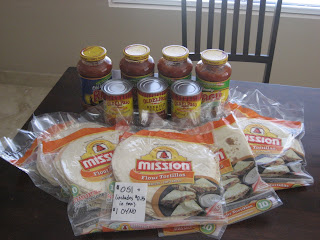
      Some would say that I actually made money on this transaction since I paid $0.51, but got a coupon back for $1 off my next shopping order (which I used, of course). I bought 4 jars of Ragu, 3 cans of refried beans, and 5 packages of tortillas. Awesome.Here I spent $9.16 for the following: 2 boxes of Ritz, 3 bottles of Sunny-D, 1 gallon of milk, 2 bags of tortilla chips, 1 bag of salad, 2 packages of tortillas, 3 pounds of chicken, 3 cans of tomato sauce, 1 package of hamburger buns, 1 package of hot dog buns, a dozen eggs, 4 packages of guacamole, 4 1/2 pounds of cheese, 1 package of Kraft Singles, and 4 toothbrushes.

      As you can see, some shopping trips are big and some are very small and simple. It just depends on the sales and what coupons I have. Have I convinced you of the awesomeness of using coupons yet? Let me know in the comments.

      To read more about why everyone should use coupons, read these two well written articles by Money Saving Mom here and here.

      Saturday, January 29, 2011

      Rebates: Deal or No Deal


      Have you ever seen a tag on an item such as shampoo that says something like, "Try Me Free"? Have you wondered what kind of trick the manufacturer is trying to pull on you? Today we are going to unearth the deep mysteries of rebates.

      A rebate is when the manufacturer reimburses you for buying their product. It's different from a coupon because you have to pay for the item first and then send in the rebate via snail mail. Rebates are awesome, but they can be dangerous—if you forget to mail something in, you lose the money. That said, you can get a lot of stuff for free or close to free if you play it right. I will show you how to do it.

      Since October 2009 I have sent in for over $800 in rebates! It adds up quickly. Usually rebates are offered for non-food items like shampoo, lotion, razors, cleaning supplies, or batteries, but sometimes you can find rebates for food. Last year I scored free Jennie-O turkey, free Pepperidge Farm cookies, and free frozen pizza after rebate. Not too shabby.

      So, where do you find a rebate? I usually find out about available rebates from the couponing blogs I read (consult my list to the left) and then get the actual rebate form from one of three places:
      1. On the package of the item purchased. Many times if a company has come out with a new product they offer a rebate as an incentive for people to try it. This is how I got free Pepperidge Farm cookies and Kelloggs cereal this year.
      2. On the internet. This is the most common way to find rebates. You just have to print them out.
      3. At the store, usually at the register. Places like ACE or Staples love to print out a rebate when you buy the product. Toys 'R' Us has rebates on board games fairly often that you pick up either in the aisle with the games or at the register.
      Rebates are really easy to do. The key is to fill out your rebate form immediately after you get home from the store. If you don't fill it out and send it in that same day the chances that you are going to remember to do it go down exponentially with each passing day (I did a very scientific study to determine that). The rebate form always has very simple instructions plainly outlined. There is always a deadline for when you have to send the rebate in. Usually you have to fill out the form, cut out the UPC from the package, and send them with the original receipt from the store. Plan on cutting out that UPC before you put the product away or else you will forget to do it. Trust me. Just do it. It's worth it.

      So why do manufacturers offer mail-in rebates? It's not just because these companies are nice, I'll tell you that. From what I can tell there are three reasons that rebates exist:
      1. The manufacturer is trying to get you hooked on their product. Let's take Oil of Olay, for example. If you try their lotion for free and love it they are going to make a huge profit off you if you keep buying their lotion at full price. And you are going to think they are a really nice company because they gave you free lotion initially.
      2. The manufacturer is trying to make you a loyal customer by giving you a "Starter Package", but then you have to pay for refills. This happens a lot with razors. Gillette will give you their top-of-the-line razor for free after rebate, but then you are stuck buying new cartridges for it after that. I say go ahead and get what's free and don't worry about buying refills. Just get another free razor!
      3. The manufacturer knows that most people won't actually send in for the rebate. Many people will get sucked into the idea that this lotion is free so they buy it, then they never send in for the rebate. If you don't actually send in the rebate it's not saving you any money!
      There are a few different varieties of rebates out there. Again, you just have to read the instructions on the form to know exactly what to do, but I will give you an idea of some of the most common rebates I see: (don't be mad that I am making another list)
      1. The very straightforward "Try Me Free" rebate. This is easiest kind. Fill out the form, cut out the UPC, and send in the receipt. Get a check in a few weeks or months. Because they refund you the total cost of the item it doesn't matter how much money you have to fork out initially.
      2. The similar "Now $2.99 (After Mail-In Rebate)". ACE and Staples love to do these. They advertise a rake or a ream of paper for the price after the rebate so it lures a lot of people into the store. Only a fraction of the people who actually buy that product will send in for the rebate, so the store makes a large profit. Don't be one of those people!
      3. The "Get $20 Back When You Spend $50" rebate. Oil of Olay loves to do this. Sometimes it has to be $50 on one receipt and sometimes you just have to spend a total of $50 in a given window of time. That means you can buy different products at different stores and send all the receipts in together. Read the instructions on each rebate to make sure you are following the rules.
      4. The "Get $10 When You Buy 10 Products" rebate. I did one like this with Keebler around Christmas last year. I waited for the cookies to go on sale, bought 10 packages for a total of about $12, and then sent in the rebate. Once I get the check back it will basically be $2 for 10 packages of delicious cookies. Don't worry, we gave some of them away, with missing UPC symbols, of course!
      5. The non-cash back rebate. It's the same idea as a rebate, but instead of sending you a check the manufacturer sends you something else. You've seen them: free movie tickets when you buy specially marked boxes of cereal, free photos from Snapfish when you buy five boxes of Pop-Tarts. These usually aren't a great deal, but sometimes you can find one that is. If they charge you for shipping and handling, it's probably not worth it. Last year I got five free cups of yogurt (with coupons) and then sent the lids in for a free Leap Frog book that I gave my son for his birthday. Can't get much better than that!
      I hope that I have clarified the issue of rebates for you. If you have questions please leave a comment or email me. Rebates are awesome because you can get tons of free stuff (plus it's just fun to get checks in the mail). The key is to simply remember to send them in and follow the instructions on the form!

      Tuesday, January 25, 2011

      Couponing: Where to Start

      The most frequent question I receive when people find out I coupon is, “Where do I start?” True, it can be kind of overwhelming. Hopefully I can shed some light on this issue and give you the tools you need to start couponing and saving money.
      I am going to say something that most couponers probably don’t want to hear: coupons themselves don’t actually save you a ton of money. They save you a few bucks here and there and allow you to sometimes get things for free or almost free. Once in awhile you can even make a few cents by using coupons. However, the things that will save you the most money are the good shopping principles that smart shoppers and couponers use. Now don’t misunderstand. I LOVE coupons and I am a huge advocate of using them. I just think that they are more of the icing on the savings cake rather than the foundation of it. For those of you who have tried couponing before and feel like it was too overwhelming, this should be welcome news.
      If you want to start saving a bunch of money today I would suggest you implement the following habits into your shopping routine:
      • Buy the things that are on sale and stock up on those things so that you never have to pay full price for them.
      • Plan your meals around the things that are on sale and the things you already have in your pantry. Planning your meals will also make it less likely that you waste your money going out to eat so often.
      • Stop buying toiletries at grocery stores and get started on learning how to play the drug store game (Walgreens, CVS, and Rite Aid each have their own version of the game. If you play it right you should be able to pay pennies on the dollar for most if not all of your toiletries and over-the-counter medication.) Here are a few good links to learn how to make the most out your shopping at Walgreens, CVS, and Rite Aid.
      • Match the coupons you have to the sales at the stores to increase your savings. Most coupons are available in the Sunday paper and online. There are tons of free blogs out there that have grocery store coupons match-ups every week for stores all over the country. Here are a few of my favorites: Cents'Able Shoppin', The Krazy Coupon Lady, The Thrifty Mama, and Couponing 101.
      • Don’t stress. Couponing is a skill and it has to be learned. There will be times when the learning curve seems pretty steep, but hang on and it will get easier. I remember when I first started couponing I didn’t sleep well for a few nights because I was so anxious about getting the hang of this new skill. It was such a paradigm shift for me. It was a completely different way of shopping than what I was accustomed to. But as you practice and learn you will get better at it and it will seem easy in no time.
      This blog is not meant to be a couponing blog with coupon match-ups. I feel that there are plenty of well written blogs out there that meet that need (refer to point #4 or my blogroll on the left). This blog is meant to teach you sound shopping and food storage principles that will become money-saving habits. And couponing is just one of those habits.